Stress, Influence, & Prayer
There are three basic spheres of awareness in human life: control, influence, and concern. The sphere of control is the most secure and stress-free area of life. This could be our job, our favorite hobby, routine, schedule, etc. In this sphere there may be some variables or unexpected influences, but we generally feel totally in control in this sphere of life. Knowing that my garage or closet is totally organized and clean creates peace because my control has dominated an area that could potentially be disorganized and stress-creating.
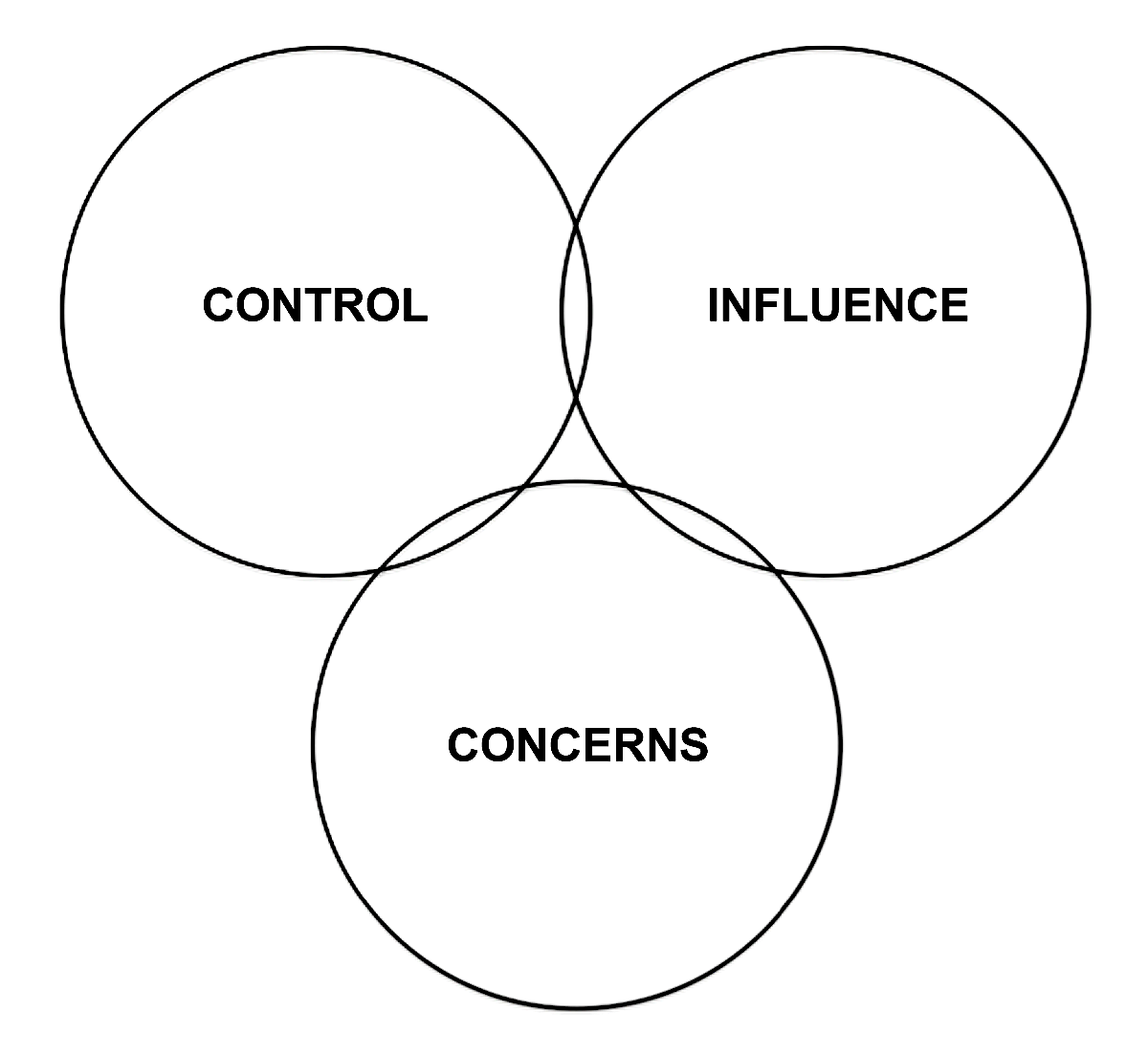
The sphere of concern is the most problematic sphere of human awareness. This sphere contains much worrying or concerning information in areas where we have absolutely no control or influence, but we wish we did: the national economy, global politics, starving children in foreign countries, natural disasters, etc. The negative aspects of this sphere literally abuse the natural empathy for our fellow man.
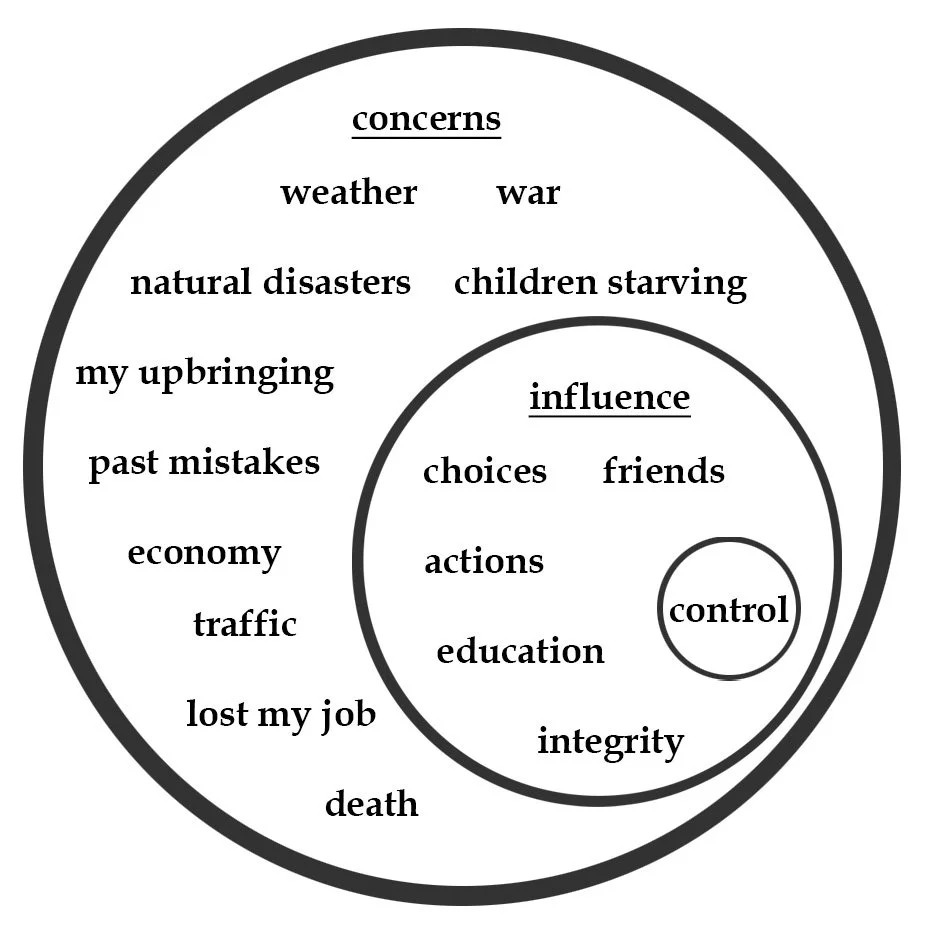
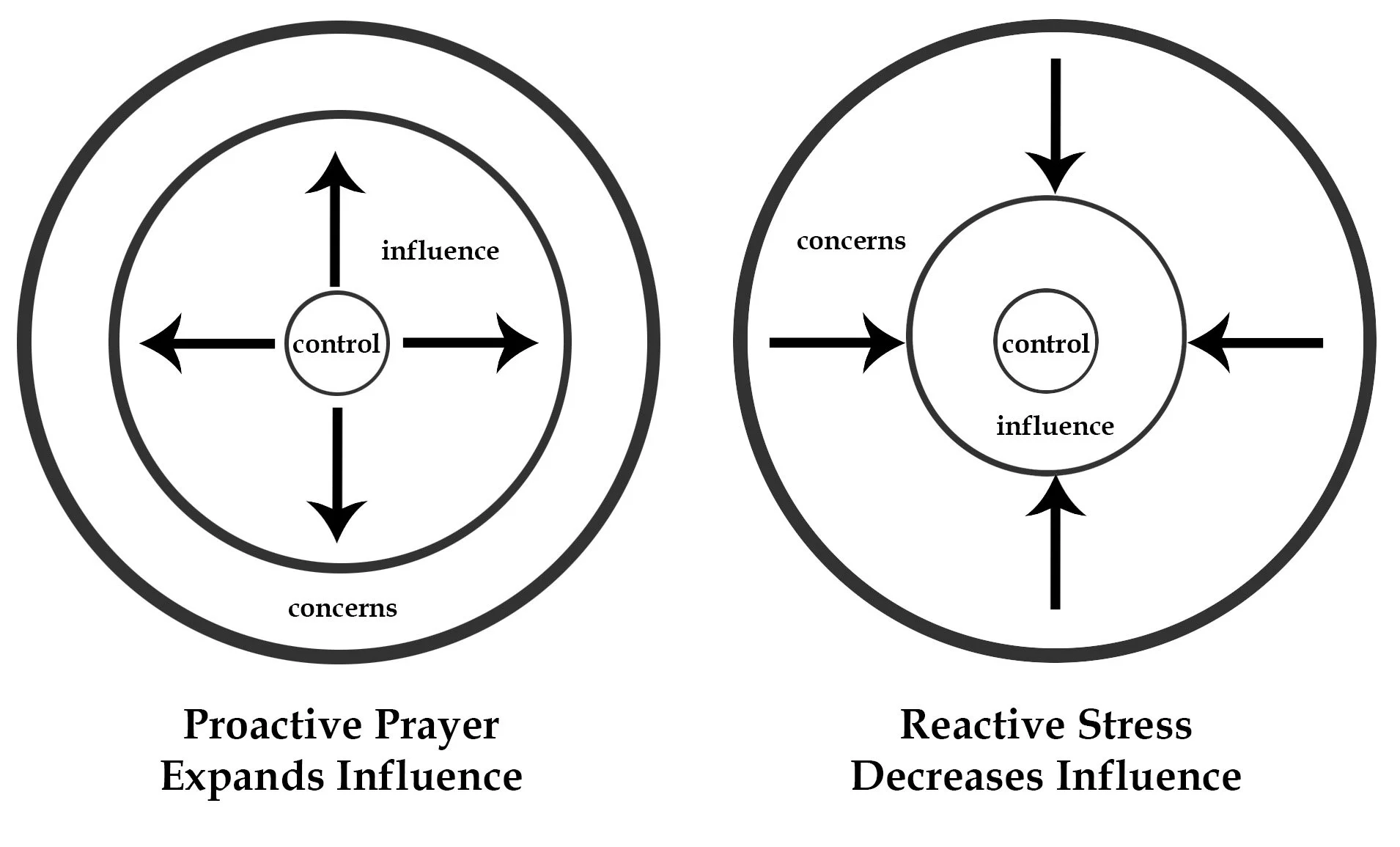
An unhealthy degree of stress in life can simply and accurately be described as the disproportional correlation between a person’s sphere of awareness and sphere of influence. I have way more concerns than influence or control.
If I am consistently aware of many things that concern me but perceive myself as having a significantly smaller sphere of influence, I’m going to be stressed out all the time. “The earth is being destroyed by pollution and I have no ability to control or influence the situation!” “Children are starving in a foreign land, and I can’t do anything about it!” “The government is destroying our economy and it’s going to destroy me too!” (This is why fundraising for causes outside our sphere of influence is so effective; it preys on our stress).
Secular psychologists, therapists, and life coaches will encourage clients to abandon areas of concern when there is no opportunity or ability to have influence, encouraging clients to ‘let it go!’ or ‘forget about it!’, because focusing on areas of concern where there is no influence creates stress. As one life coach concluded, “Stop wasting your time, attention, and energy thinking or worrying about these things.” But are we really to give up on global or distant concerns?
For the Orthodox Christian, what is the solution to this problem? Christian compassion alone (never mind watching the news, smart phone notifications, social media posts, etc.) draws the believer to be aware of situations that are seemingly out of our sphere of influence: Orthodox Christians fighting each other in Russia and the Ukraine, impoverished Orthodox missions in Africa and South America, fellow believers being persecuted by Muslims in the middle east, and so on. How are we to be compassionate and yet not be overwhelmed by stress?
The sphere of influence is the area of awareness in life where we don’t have total control, but we are confident that we have sufficient influence in this area to generally be at peace, able to deal with surprises, and manage changes and transitions with success the majority of the time: finances, coworkers, children, pets, extended family, education, vocation, etc. The sphere of influence will pose challenges in life, but our callings, vocations, dreams and desires seem reachable, and our convictions can be pursued to a satisfying degree. When we focus on things we can influence, we expand our knowledge and experience. As a result, our circle of influence grows.
The answer is prayer. Make a list of your most pressing concerns and start praying daily for those situations or topics. For when we fulfill the command of Christ to pray (Matt. 6:6) we take a position both spiritually and psychologically to positively impact concerns that at first glance seemed to be out of our sphere of influence. And this proactive prayer immediately decreases stress by literally expanding our sphere of influence and putting everything into the sphere of God’s control. So make a list, and proactively expand your influence, while letting God be in control of everything in the end.
In Scriptural terms, this prayerful activity is accepting to “not be anxious about anything, but in every situation, by prayer and petition, with thanksgiving, present your requests to God. And the peace of God, which transcends all understanding, will guard your hearts and your minds in Christ Jesus” (Phil. 4:6-7). In spiritual terms, this is prayerful and engaged abandonment to God’s providence. In his tremendous essay, On the Providence of God, John Chrysostom explains how believers are to deal and cope with seemingly hopeless situations. Or in the words of Kallistos Ware, “It’s God’s world, and He is going to do with it whatever He pleases.” In theological terms, this is submitting our free will to the obedience of prayer and the exchanging of our will for God’s will.
Pray proactively for concerns that are compatible with Orthodox Christian compassion (safe weather, starvation, persecution, war, economy, past mistakes, employment, death) and then give them over to God’s providence. Let go of secular concerns that increase stress (politics, power, fame, news, television, social media, celebrities). Increase your experience of influence, monitor the resulting stress reduction, and live a better life in this world and the world to come.